Loading game
Preparing player
Loading game
Ready to play
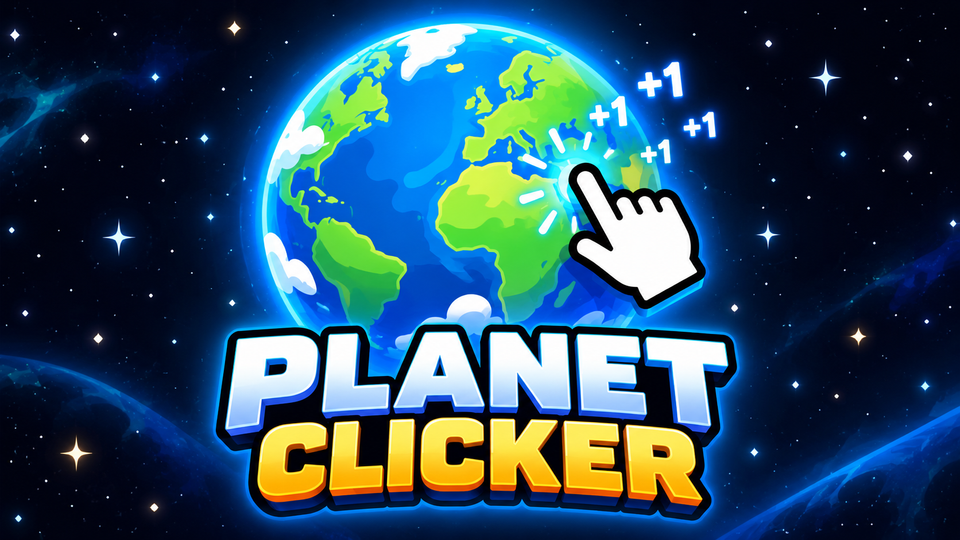
Planet Clicker is an idle space game where you generate energy, buy automatic upgrades, unlock Mars and Venus, and expand production across planets.
Planet Clicker is a space-themed incremental game where you click a planet to generate energy, spend that energy on upgrades, and gradually automate production. You begin on Earth with basic technology, then expand to Mars and finally Venus as your energy output grows. Each new planet introduces stronger production options, turning the early manual-clicking loop into a much larger idle economy.
The original Planet Clicker was developed by Coltroc in Scratch and released in March 2020. The browser version uses a straightforward mouse-based interface and was later followed by Planet Clicker 2, which expanded the idea with additional planets and technologies.
Your first source of energy is the planet itself. Clicking Earth adds energy manually, and that resource can be spent in the shop on improvements that either strengthen each click or generate energy automatically.
Once automatic production becomes strong enough, the game changes from constant clicking into resource management. Instead of earning every unit yourself, you decide which upgrade gives the most useful increase and reinvest the resulting energy into even stronger production.
The long-term objective is planetary progression. Earth provides the opening economy, Mars adds more advanced technology, and Venus contains the highest-level upgrades in the original game.
Planet Clicker uses a simple mouse-based control scheme. CrazyGames documents the left mouse button as the primary control, while the current Coolmath Games version also uses on-screen shop and navigation buttons.
Earth is where every run begins. The early upgrades are based on relatively simple production methods, including improvements to your click power, farms, and power plants.
The key early decision is whether to spend on stronger manual clicks or passive production. Click upgrades are useful while you are actively playing, but automated producers become increasingly important because they keep the energy counter moving without requiring every unit to come from the mouse.
A balanced opening usually works better than relying completely on one source. Manual clicks can help you reach the next upgrade quickly, while automatic production keeps generating energy during the periods when you are comparing shop options or waiting for a larger purchase.
After producing enough energy on Earth, you can unlock Mars. The red planet introduces a stronger set of production options, including solar oil, coal, nuclear energy, and alien technology.
This is an important step because later upgrades produce far more energy than the opening Earth economy. Once Mars becomes available, compare its technology with what another Earth purchase would provide before spending heavily on older production methods.
The goal is not to abandon Earth immediately, but to place new energy where it produces the fastest useful growth.
Venus is the third and final planet in the original Planet Clicker. It costs 1 trillion energy units to unlock and introduces late-game upgrades based around iron, lava, and Future Technology.
Reaching Venus therefore acts as a major progression milestone. By this point, manual clicks are only one part of a much larger production system built across several planets.
Future Technology sits at the top end of the original progression and is identified by CrazyGames as the strongest and most expensive upgrade available.
| Planet | Main Progression |
|---|---|
| Earth | Start clicking, improve click power, and build basic automatic energy production. |
| Mars | Unlock stronger technologies such as coal, nuclear energy, and alien technology. |
| Venus | Reach the original game's late-stage economy with iron, lava, and Future Technology. |
Your current energy total tells you what you can buy now, but your production rate tells you how quickly you can afford the next upgrade. This makes energy per second one of the most useful numbers to watch once automated production becomes important.
For example, saving a very large amount for an expensive upgrade can be inefficient if a cheaper purchase would dramatically increase passive income first. Buying the smaller improvement may reduce the total time needed to reach the larger target.
This is the central optimization problem in Planet Clicker: spend enough to keep production growing without delaying major planetary unlocks unnecessarily.
Manual clicking is useful at the beginning, but passive energy production scales better as costs increase. Buy automatic producers once they become affordable so progress does not depend entirely on repeated clicks.
Do not purchase an upgrade simply because it is the newest item in the shop. Consider how much additional energy it generates compared with its cost.
Saving makes sense when you are close to unlocking Mars, Venus, or an especially strong technology. Otherwise, unused energy may be better invested in production that helps you reach future targets faster.
Planet progression does not mean earlier worlds become irrelevant immediately. Compare available upgrades across your unlocked planets before deciding where the next large investment belongs.
When passive production is already running but you are close to affording another upgrade, additional clicks can shorten the remaining wait without changing your overall build.
The original Planet Clicker contains three planets: Earth, Mars, and Venus. Planet Clicker 2 keeps the same energy-production idea but expands the system with more planets, technologies, and updated graphics. The sequel was released in January 2022 and was also developed by Coltroc.
If you are playing the original game, the main progression path remains much simpler: establish Earth, unlock Mars, then build enough energy to reach Venus and its strongest technologies.
If you enjoy incremental production, click-based upgrades, and watching a resource economy grow, try these related games on YaloGames:
Your goal is to generate energy, improve production, and unlock additional planets. The original progression moves from Earth to Mars and then Venus.
The original game contains three planets: Earth, Mars, and Venus.
Click the planet with the left mouse button to earn energy manually, then buy upgrades that increase click strength or produce energy automatically.
Planet Clicker was created by Coltroc in Scratch and originally released in March 2020.
Future Technology is the final high-level upgrade on Venus and is identified as the game's most expensive and powerful production option.
Planet Clicker starts with simple manual energy generation but gradually becomes a larger incremental economy. Use early clicks to establish production, automate as soon as useful upgrades become affordable, compare the value of each purchase, and keep reinvesting until Earth leads to Mars and Mars leads to Venus. The main challenge is deciding when to spend now and when to save for the next major jump in energy production.
LIVE CHAT
No messages yet. Start the conversation.
Log in to join the chat.
Login