Loading game
Preparing player
Loading game
Ready to play
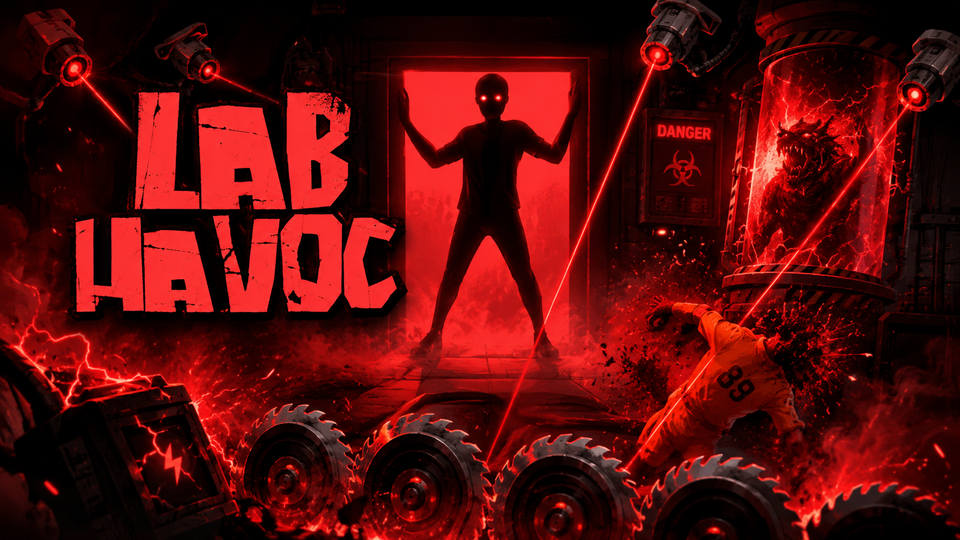
Play Lab Havoc online for free. Build crazy trap chambers, test weapons on ragdolls, trigger physics chain reactions, earn rewards, and unlock powerful new tools.
Lab Havoc is a physics-based sandbox simulation game where you become the designer of a chaotic experimental laboratory. Fill a test chamber with traps, weapons, mechanical devices, explosives, and unusual physics tools, release a ragdoll test subject, and watch your carefully designed setup come to life.
Instead of following one fixed solution, Lab Havoc encourages experimentation. Place a saw in one position and the result may be completely different from moving it only slightly. Combine launchers with spikes, explosives with moving traps, or gravity-based gadgets with other weapons to create increasingly complicated chain reactions.
Your main objective in Lab Havoc is to build an efficient test chamber that produces strong results when the experiment begins.
Start by opening your available equipment and choosing traps or weapons. Drag them into the laboratory and position each device where you believe the ragdoll will interact with it.
Once your setup is ready, press the Start button and release the test subject into the chamber.
After the simulation begins, the physics system takes control. The ragdoll can bounce between traps, become redirected by launchers, trigger explosives, pass through lasers, and activate other devices depending on how you arranged the laboratory.
When the experiment ends, evaluate what worked, earn your rewards, unlock or improve equipment, and redesign the chamber for another attempt.
The basic gameplay loop is:
Lab Havoc is primarily controlled with the mouse, keeping the interface simple so you can concentrate on designing experiments rather than memorizing complicated controls.
The laboratory begins as an empty space where you decide exactly how the experiment should work.
Instead of receiving one predetermined obstacle course, you create the course yourself by placing different devices around the chamber.
You can position equipment on floors, walls, or other useful areas depending on what the current item allows.
The freedom to redesign the laboratory is what makes every attempt different. A setup that looks impressive may perform poorly, while a surprisingly simple arrangement can create an effective chain reaction.
Randomly filling every available space with equipment is not always the best strategy.
A trap only provides value when the ragdoll actually reaches it.
Before placing another device, think about the path your current setup is likely to create.
If one launcher sends the ragdoll toward the upper-right section of the chamber, place your next useful trap somewhere along that expected trajectory rather than on the opposite side of the room.
New players can learn the physics much faster by beginning with only a few devices.
Place one launcher and one damage trap, then run the experiment and observe what happens.
Once you understand the movement, add another device where it can naturally continue the sequence.
Building step by step makes it easier to understand why a setup works instead of creating a huge laboratory where several interactions become difficult to analyze.
Sharp traps are useful because their purpose is straightforward and their placement can be highly predictable.
Place them in locations where the ragdoll is likely to land, bounce, or be pushed by another device.
Instead of placing spikes randomly across the chamber, try positioning them at the end of a movement sequence.
For example, a launcher can redirect the test subject toward a spike zone and create a more deliberate interaction.
Saw-based traps can provide repeated interactions when the ragdoll remains close enough to them.
Position them near locations where another device slows, traps, or redirects the subject.
A saw placed in an isolated corner may rarely activate, while one placed directly along a predictable physics path can contribute much more consistently.
Laser devices offer another way to build controlled damage zones inside your laboratory.
Their effectiveness depends heavily on positioning and direction.
Try to align lasers with areas where the ragdoll is likely to travel rather than placing them only because empty space is available.
Combining a laser with movement-control equipment can help keep the test subject inside the active area longer.
Explosives create powerful physics reactions because they affect both damage and movement.
A well-positioned explosion can send the ragdoll toward another section of your laboratory and begin an entirely new chain of interactions.
Think about what happens after the explosion rather than considering only the initial impact.
If the blast pushes the subject toward an empty wall, part of the opportunity is wasted. If it sends the subject directly toward another device, the experiment can continue.
Explosives become much more interesting when they function as part of a larger sequence.
You can design a setup where one device pushes the ragdoll into an explosive area, the blast launches it toward another trap, and that interaction creates the next movement.
The best combinations use each device to help activate the next one.
Launchers are useful for controlling the ragdoll's movement through the chamber.
Instead of relying entirely on gravity, use propulsion devices to move the subject toward specific locations.
Launchers can connect parts of a setup that would otherwise never interact with one another.
They are especially valuable when you want to create longer combinations instead of allowing the test to end after one or two traps.
Energy-based equipment such as lasers and electric devices can create continuous or precisely positioned effects.
These tools reward thoughtful placement because they work best when the ragdoll remains inside the active area for enough time.
Combine energy weapons with movement-control traps that keep the subject nearby or repeatedly send it through the same zone.
Advanced progression can introduce unusual physics-manipulation equipment such as gravity-based traps.
These tools change how the ragdoll moves rather than simply creating another direct interaction.
A gravity device can redirect an otherwise wasted trajectory toward the center of your experiment and allow several additional traps to activate.
Once these tools become available, you can design much more complicated chamber layouts.
Chain reactions are one of the most important ideas in Lab Havoc.
Instead of having every trap function independently, try to make one interaction naturally lead toward another.
For example:
A setup like this makes much better use of your chamber than several disconnected devices that rarely interact.
Physics determine how almost every experiment develops.
Momentum, angle, gravity, collisions, explosions, and trap placement all influence where the ragdoll moves next.
You cannot control the subject directly after pressing Start, so the preparation phase becomes extremely important.
Your job is to predict the physics before the simulation begins.
Every test provides useful information.
Do not focus only on the final score.
Watch the complete movement path and identify where the ragdoll loses momentum, misses a trap, or reaches an empty section of the chamber.
Those weak points tell you exactly where your next adjustment should be made.
A large redesign is not always necessary when an experiment performs poorly.
Moving one launcher slightly higher or rotating a trap by a small amount can completely change the resulting trajectory.
Make controlled adjustments and test again.
This approach helps you understand which changes actually improve the setup.
When the ragdoll is already moving quickly, try to preserve that momentum.
Position the next trap where the current trajectory naturally carries the subject.
Forcing a fast-moving ragdoll into a completely different direction can sometimes reduce the efficiency of the entire sequence.
Smooth transitions between devices can produce longer chains.
A dead zone is an area where the ragdoll lands but no useful interaction happens afterward.
These locations can end an otherwise strong experiment.
When you notice the subject repeatedly stopping in the same place, add a launcher, trap, or other appropriate device nearby to continue the sequence.
Turning dead zones into active areas is one of the fastest ways to improve an existing laboratory.
Walls can become part of your physics strategy.
A ragdoll bouncing from one side of the chamber may naturally return toward another trap.
You can use wall collisions to redirect movement without spending another expensive piece of equipment.
Observe how the chamber boundaries affect your setup before filling every surface with devices.
Do not build everything along the laboratory floor.
Launchers and physics tools can send the test subject into higher sections of the room, giving you additional areas for traps.
Vertical layouts can create longer movement sequences because gravity eventually brings the ragdoll back toward lower equipment.
Experiment with designs that use the entire chamber.
An effective experiment does not necessarily need to move continuously from left to right.
Try creating loops that redirect the ragdoll through the same useful area multiple times.
Launchers, gravity tools, walls, and other movement devices can potentially return the subject toward traps that have already provided value.
A well-designed loop can dramatically increase how long the experiment continues.
More equipment does not automatically create a better setup.
Too many traps can interfere with one another and make trajectories less predictable.
One explosion may accidentally send the ragdoll away from several other devices you expected it to reach.
Leave enough space for movement and use each item with a clear purpose.
A small number of well-positioned traps can outperform a large collection of randomly placed equipment.
Before purchasing or adding another device, ask what role it will perform in the existing sequence.
Will it redirect movement? Extend the combo? Fill a dead zone? Create another chain reaction?
If the answer is unclear, test your existing setup before adding more complexity.
Successful experiments provide progression rewards that can be reinvested into your laboratory.
The better your setups perform, the more opportunities you gain to expand your arsenal.
This creates the main progression cycle:
Every new piece of equipment gives you another way to redesign existing experiments.
Early traps provide enough variety to understand the basic physics, while progression gradually introduces more powerful and unusual tools.
Do not abandon your earlier equipment simply because something stronger becomes available.
Basic launchers and traps can remain extremely useful when they help position the ragdoll correctly for an advanced weapon.
The strongest laboratory often combines simple movement tools with more powerful damage equipment.
If your version includes weapon upgrades, prioritize equipment that already performs reliably in your current setups.
Improving a trap that activates repeatedly can produce more value than upgrading an expensive device that the ragdoll rarely reaches.
Efficiency should guide your progression decisions.
Some Lab Havoc builds include objectives or milestones that reward specific experiment results.
These challenges encourage you to build differently instead of repeating the same layout forever.
An objective may require a particular type of interaction, a longer chain, or another experimental condition.
Use these goals as opportunities to learn equipment you might otherwise ignore.
The sandbox design rewards curiosity.
One successful chamber can generate good results, but continually testing new layouts teaches you more about the physics system.
Move devices into unusual positions, combine tools you have not used together before, and observe what happens.
Even failed experiments can reveal a useful interaction for a future design.
When experimenting, avoid changing every part of your laboratory simultaneously.
Keep most of the successful setup intact and change one section.
Run another simulation and compare the result.
This makes it much easier to determine whether the new idea improved the experiment.
When two traps work particularly well together, remember the combination.
You can reuse the same basic idea in larger setups and connect it to additional devices.
Building a collection of reliable mini-combinations makes creating complex experiments much easier.
Learn how a simple setup behaves before filling the chamber with equipment.
The movement path tells you where your next trap should be placed.
Movement tools are valuable because they connect separate parts of your laboratory.
If the ragdoll repeatedly stops in one location, place something there that continues the sequence.
Design each trap so its result helps activate another device.
Experiment with floors, walls, and vertical space instead of building everything in one small area.
Leave enough room for physics-driven movement between devices.
A tiny adjustment can sometimes transform an ineffective setup into a much stronger one.
Invest in tools that already activate frequently rather than equipment that rarely contributes.
Sandbox games reward creative testing. A strange combination may perform much better than expected.
Begin by identifying where your first trap sends the ragdoll.
Place the second device directly along that expected path.
Run the simulation and observe where the subject travels after the second interaction.
Continue adding devices one stage at a time until you create a complete sequence.
If one section becomes unreliable, adjust its position before expanding the chain further.
Higher scores generally come from making your equipment interact efficiently rather than simply using as many traps as possible.
Keep the ragdoll moving through active areas of the chamber and reduce sections where nothing happens.
Use launchers and physics manipulators to redirect movement, place repeated-effect traps in locations where the subject spends more time, and use explosives where their force can lead into another interaction.
Longer, well-connected chains usually provide stronger experimental results.
Do not place explosives only where you expect the ragdoll to land.
Think about where the blast will send it afterward.
Position another useful trap along that new trajectory so the explosion becomes the beginning of another sequence rather than the end of the experiment.
Testing the exact spacing several times can help you find a much more reliable arrangement.
Launchers work best when they have a specific destination.
Before placing one, decide which trap or section you want the ragdoll to reach next.
Adjust the angle and position until the resulting trajectory consistently moves toward that area.
A launcher that simply throws the subject randomly around the room may look entertaining but provide less reliable progression.
After every experiment, identify which equipment never activated.
Ask whether that trap needs to move or whether it should be removed completely.
Unused equipment occupies valuable chamber space and can make your design more complicated without improving the result.
Every device should contribute to the experiment whenever possible.
Start with one reliable movement path.
Use simple traps to create predictable interactions and add stronger equipment only after you understand where the ragdoll will travel.
Connect sections using launchers, explosions, walls, or gravity effects.
Leave enough space between devices for the physics system to work naturally.
Finally, replay the experiment several times and make small adjustments until the setup becomes consistent.
Even a carefully planned setup can produce slightly different results between tests.
Small changes in collisions and ragdoll movement can alter the entire chain reaction.
That unpredictability is an important part of Lab Havoc.
Instead of trying to make every experiment completely identical, design setups that remain useful even when the subject's trajectory varies slightly.
Lab Havoc is not primarily about quick reflexes.
Most of the important decisions happen before you press Start.
You need to analyze space, predict movement, choose equipment, adjust angles, and understand how one device can interact with another.
The simulation then shows whether your idea actually works.
The strongest strategy can be summarized in four steps:
This experimentation cycle is the heart of Lab Havoc and gives you a reason to keep redesigning the chamber.
Lab Havoc combines sandbox creativity, ragdoll physics, traps, weapons, explosions, chain reactions, progression, and experimentation into an accessible browser simulation game.
The controls are straightforward: choose equipment, place it, and start the experiment.
The deeper challenge comes from designing a setup where every device contributes to a larger sequence.
Launchers can redirect movement, explosives can begin new chains, lasers and saws can create active zones, and gravity-based tools can transform how the entire chamber functions.
Because you are free to reposition equipment and test new combinations, there is no requirement to solve every experiment with exactly the same strategy.
If you enjoy physics sandboxes, creative building, ragdoll simulations, experimentation, and games where unexpected interactions are part of the fun, Lab Havoc provides plenty of room to create your own chaotic laboratory.
Enter the testing chamber in Lab Havoc and begin designing your ultimate physics experiment. Choose spikes, saws, lasers, explosives, launchers, energy weapons, and unusual gadgets, then place them around the laboratory and prepare your test.
Press Start, watch the ragdoll interact with your creation, analyze the results, collect rewards, and return to the editor to improve everything that did not work as planned.
Unlock stronger tools, connect more traps, create longer chain reactions, and keep experimenting until your laboratory becomes a perfectly engineered machine of chaos.
If you enjoy Lab Havoc, try these similar ragdoll, physics, sandbox, destruction, and experimentation games on YaloGames:
LIVE CHAT
No messages yet. Start the conversation.
Log in to join the chat.
Login