Loading game
Preparing player
Loading game
Ready to play
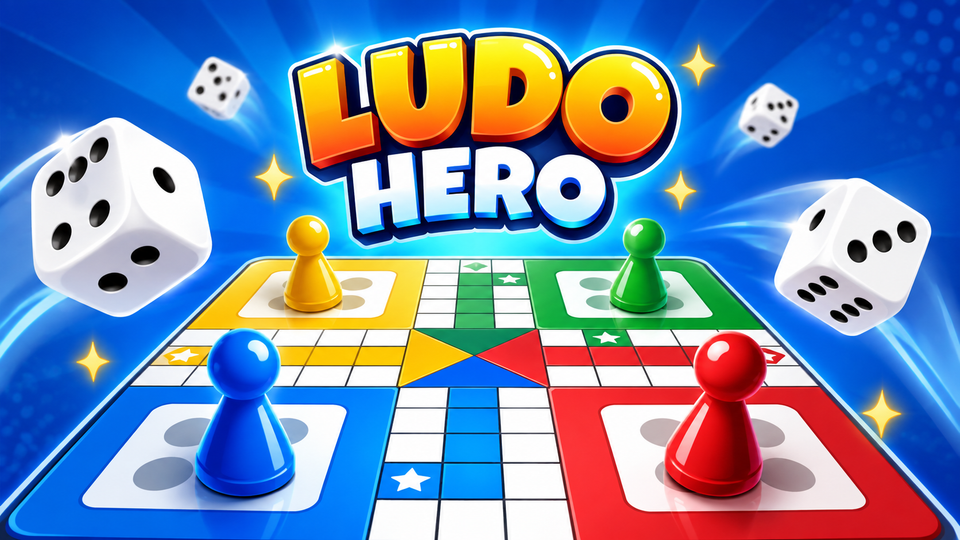
Ludo Hero is a classic board game where you roll the dice, move four pawns, capture opponents, and race every piece into the home area first.
Ludo Hero is a digital version of the classic Ludo board game where you control four colored pawns and race them around a cross-shaped board toward the center. Each turn begins with a die roll, but the strategic choice is deciding which available pawn should move. You can advance toward home, bring another pawn into play after rolling a six, or land directly on an opponent to send that piece back to its starting area.
The browser game was created by MarketJS. Ludo Hero supports matches against the computer as well as online opponents, with documented two-player and four-player options.
Every player begins with four pawns inside a starting area. Your goal is to move all four pieces onto the board, complete the full route, enter your colored finishing path, and reach the center before the other player or team of players finishes their pieces.
A pawn cannot normally leave its starting area until you roll a 6. When that happens, you can introduce a new pawn to the board or use the roll on an eligible piece already in play. Rolling a six also gives you another roll, which can create a strong turn if several useful moves are available.
Once several pawns are active, the game becomes less about simply moving the piece closest to home. You need to consider capture opportunities, exposed pieces, the position of your opponents, and whether bringing another pawn into play gives you more useful options on later turns.
The core win condition is confirmed by the official Poki listing: every one of your four tokens must complete the route and reach the home area before the other side.
Ludo Hero uses straightforward mouse controls. There is no movement keyboard to learn because the board handles movement after you select the die and pawn.
Captures make Ludo Hero more than a simple race. If one of your pawns lands exactly on a square occupied by an exposed opponent, that opposing piece is returned to its base and must roll another six before it can re-enter the track.
This can erase a large amount of progress, especially when the captured pawn had nearly completed the board. Before automatically moving your leading piece, check whether another pawn can capture a rival or escape from an opponent positioned a few spaces behind it.
Keeping only one pawn on the track limits your decisions. Every useful roll has to be assigned to the same piece, and a single capture can remove all of your progress from the board.
With two or more active pawns, one roll can create several choices. You may be able to protect an exposed piece, chase an opponent, move another pawn closer to home, or use a six to introduce your remaining pieces.
This flexibility is especially important when the die produces a number that is not useful for your most advanced pawn.
Documented versions of Ludo Hero use protected spaces where pawns cannot be captured normally. These positions can be useful when an opponent is close behind and you want to preserve a piece that has already traveled a large part of the board.
After a pawn completes the outer circuit, it enters its own colored finishing path. Reaching the final position requires the correct movement count in commonly documented versions, so a pawn near the center may have to wait while another piece uses the current roll.
Ludo Hero offers both computer and online play according to multiple browser-game listings. You can also choose between two-player and four-player matches in supported versions.
The board rules remain similar, but the decision-making can feel different. Against a computer, you can concentrate on understanding movement and capture rules. Against another player, you may need to account for someone deliberately keeping a pawn in position to threaten your pieces.
When a six gives you the opportunity to introduce another pawn, consider how many active pieces you already have. Several pawns create more legal choices on future turns and reduce the damage caused by losing one piece.
Before moving a pawn into an ordinary square, check nearby opponents. If a rival could land exactly on your position with a likely future roll, moving another pawn may preserve more progress.
Capturing an opponent who has barely left the starting area is useful, but sending back a pawn that has almost completed the circuit costs that opponent much more progress.
The piece closest to the finish is not automatically the correct choice. Another pawn may have an immediate capture available or may need to escape from an opponent threatening it from behind.
If an opponent is within capture range, reaching a safe square can be more valuable than gaining a few additional unprotected spaces.
If you enjoy dice games, classic board rules, captures, and turn-based strategy, these related games are also listed in the YaloGames catalog.
Your goal is to move all four pawns around the board and into the central home area before your opponents finish their pieces.
You need to roll a six to move a pawn out of its starting area and onto the main track.
Landing exactly on an exposed opponent sends that pawn back to its starting area, forcing it to begin the route again.
Yes. Documented browser versions include play against computer-controlled opponents as well as online matches.
Ludo Hero was created by MarketJS.
Ludo Hero combines random die rolls with meaningful decisions about which pawn should move. Roll sixes to bring more pieces into play, look for captures that reset an opponent's progress, protect advanced pawns when possible, and avoid automatically moving the same piece every turn. The die determines how far you can travel, but choosing how to use each roll determines the position you build on the board.
LIVE CHAT
No messages yet. Start the conversation.
Log in to join the chat.
Login