Loading game
Preparing player
Loading game
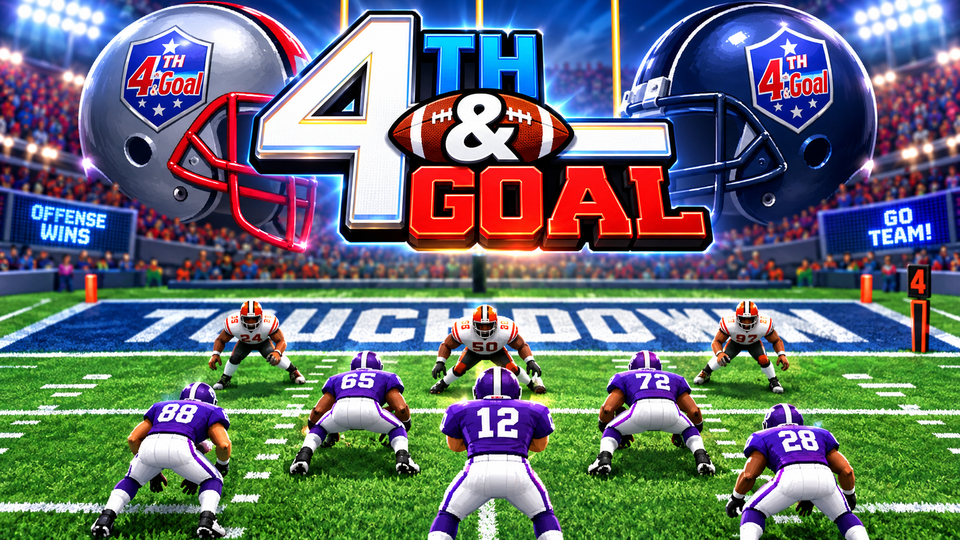
Ready to play
4th and Goal is an American football game where you call plays, run or pass, make tackles, force turnovers, and battle for touchdowns on both sides.
4th and Goal is an American football game by Glowmonkey where you control both sides of the ball. On offense, you select plays from the playbook, snap the football, run with the ball, or pass to receivers. On defense, you choose coverage, pursue the ball carrier, attempt interceptions, and use hard tackles that can produce fumbles. A defining rule of the game is that there are no punts, so reaching fourth down forces you to keep playing for the first down or the score.
The series has been developed with football strategy in mind, including plays influenced by high school, college, and professional football. The combination of play selection and direct player control means winning is not only about fast movement; choosing an appropriate run, pass, or defensive setup before the snap also matters.
Each play begins with a tactical decision. When your team has possession, choose an offensive play before snapping the ball. Some formations are designed around running the football, while others give the quarterback passing options.
After the snap, you directly control the active player. A running play requires finding space between defenders and avoiding tackles. A passing play adds another decision: you need to recognize which receiver has enough separation and throw before the defense closes around the quarterback.
Possession eventually changes, putting you on defense. Instead of watching the computer handle the play, you control a defender and try to stop the opponent from advancing. You can tackle runners, deliver stronger hits, or move into the path of a pass for an interception. Glowmonkey specifically identifies interceptions and fumbles from big hits as important defensive possibilities in the series.
Modern browser editions of the series use a compact keyboard control scheme that lets you select actions quickly during a play.
A running play gives you direct control over the ball carrier. The important decision happens both before and after the snap. The selected play determines where blockers and runners begin moving, but you still need to react to the defense rather than following the planned route blindly.
If a defender fills the intended running lane, changing direction can preserve the play. When an opening appears, accelerate through it before the defense collapses. Later editions add a speed boost, so saving that burst until a defender is closing in can be more useful than activating it immediately after the snap.
Passing plays give you several potential targets. The A, S, and D controls correspond to passing options, so you need to recognize where your receivers are moving while also watching the defenders approaching the quarterback.
Throwing immediately is not always the strongest decision. Waiting briefly may allow a receiver to create more separation, but holding the ball too long gives the pass rush more time to reach you. This creates a simple risk-and-reward decision on every passing down.
Mixing runs and passes also keeps your offense flexible. If one type of play repeatedly sends the ball into heavy defensive traffic, changing the play call can create a more favorable matchup on the next down.
Defense in 4th and Goal is active rather than automatic. You choose a defensive setup and then control a player once the football is snapped. The immediate objective is to recognize whether the opponent is running or passing and move toward the developing play.
A well-timed hard hit can cause a fumble, while positioning a defender in front of a thrown ball can produce an interception. Both outcomes can immediately change possession and prevent the opponent from finishing its drive.
Do not chase only the quarterback. On passing plays, following the receiver or moving into the passing lane can be more useful than running directly toward the backfield and leaving the target uncovered.
The game's title comes directly from one of its defining rules: there are no punts. The original developer description explains that when the offense reaches fourth down, it has to go for the conversion instead.
This changes how you should approach third down. If you are still far from the distance needed for a new set of downs, a low-gain play can leave you facing a difficult fourth-down situation. Thinking one play ahead can make your offensive decisions more effective.
Later versions of 4th and Goal include both individual Championship games and a Playoff Tournament. The tournament creates a longer sequence in which you continue winning matches toward the final championship rather than treating every game as a standalone contest.
The underlying gameplay remains centered on the same cycle: choose a formation, execute the play yourself, stop the opponent when possession changes, and finish the game with more successful scoring drives.
Your selected play provides a route, but defenders can close the intended lane quickly. If the middle becomes crowded after the snap, move toward available space instead of forcing the runner directly into the tackle.
In versions that include the W speed boost, activate it when you need to escape a nearby defender or break into open field. Spending it before a threat is close reduces the advantage it can provide.
Give receivers enough time to move into space when the pass protection allows it. A slightly later throw can be easier to complete if the defender has moved away from your intended target.
The Spacebar can trigger stronger defensive contact in versions that support big hits. Glowmonkey notes that these tackles can create fumbles, making them useful when you have a clear angle on the runner.
When the opponent passes, move toward the flight of the football rather than automatically chasing the receiver from behind. Getting between the quarterback and receiver can create an interception opportunity.
Because punting is removed, a poor third-down result can leave you with one difficult attempt to keep possession. Choose a third-down play that gives you a realistic chance of making fourth down manageable if you do not immediately reach the required distance.
If you enjoy competitive sports games built around positioning, timing, and direct player control, these titles are also available in the YaloGames catalog.
4th and Goal is an American football sports game developed by Glowmonkey. You choose offensive and defensive plays and then directly control players during the action.
Glowmonkey developed the 4th and Goal series. The original browser game was released on Kongregate in January 2010.
Yes. Offensive play selection includes running and passing options, and you control the play after the snap.
Yes. Defensive players can move into the path of a pass and intercept it. Hard tackles can also create fumbles.
No. The original game's defining rule is that punts are removed. When you reach fourth down, you must attempt to continue the drive.
4th and Goal combines football play selection with direct control after the snap. Effective offense requires knowing when to run, when to pass, and how to handle the pressure of a fourth down with no punt available. On defense, accurate tackling, interceptions, and potential fumbles give you ways to regain possession before the opponent reaches the end zone. Learn the playbook, read how each formation develops, and make each down contribute to the next scoring opportunity.
LIVE CHAT
No messages yet. Start the conversation.
Log in to join the chat.
Login